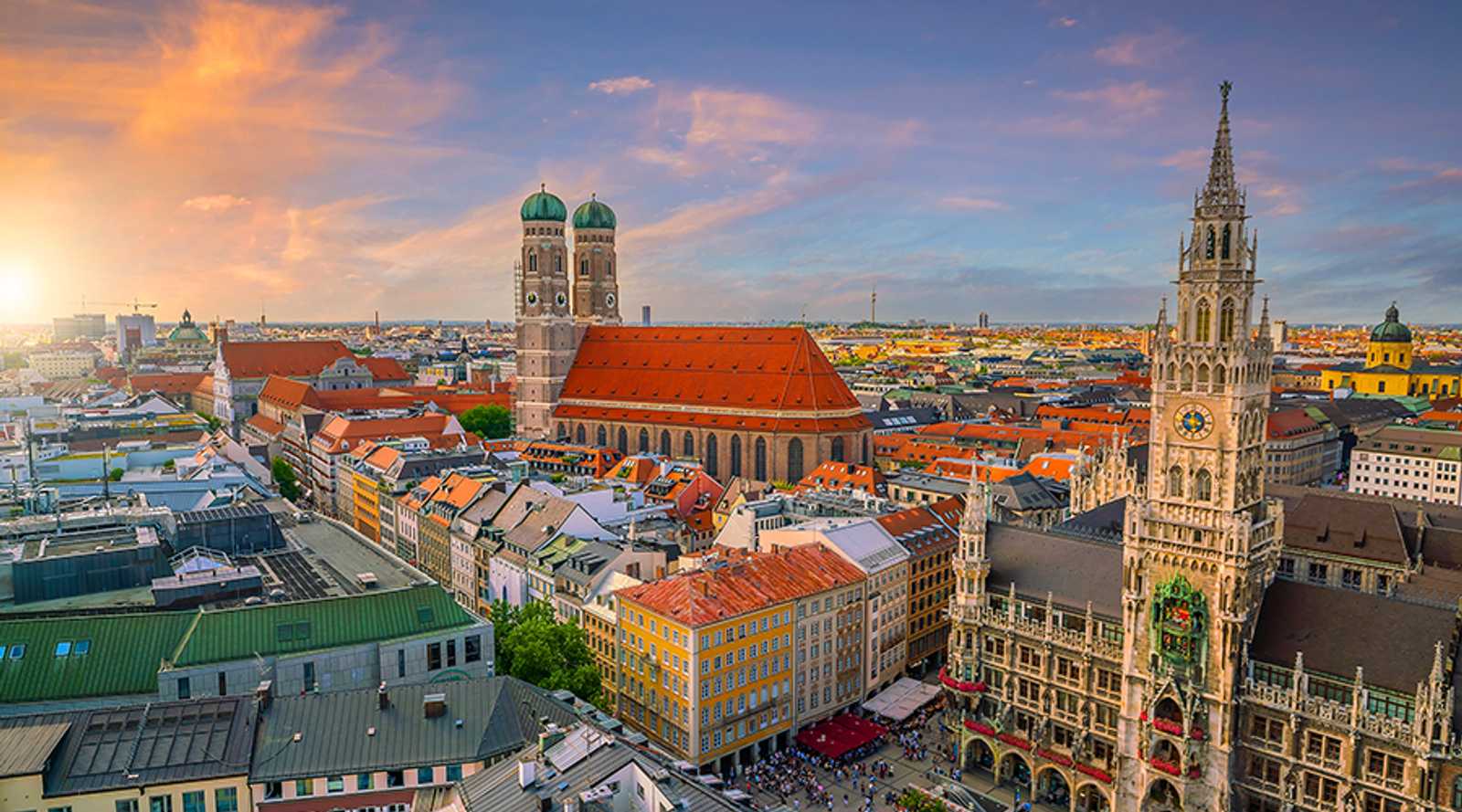
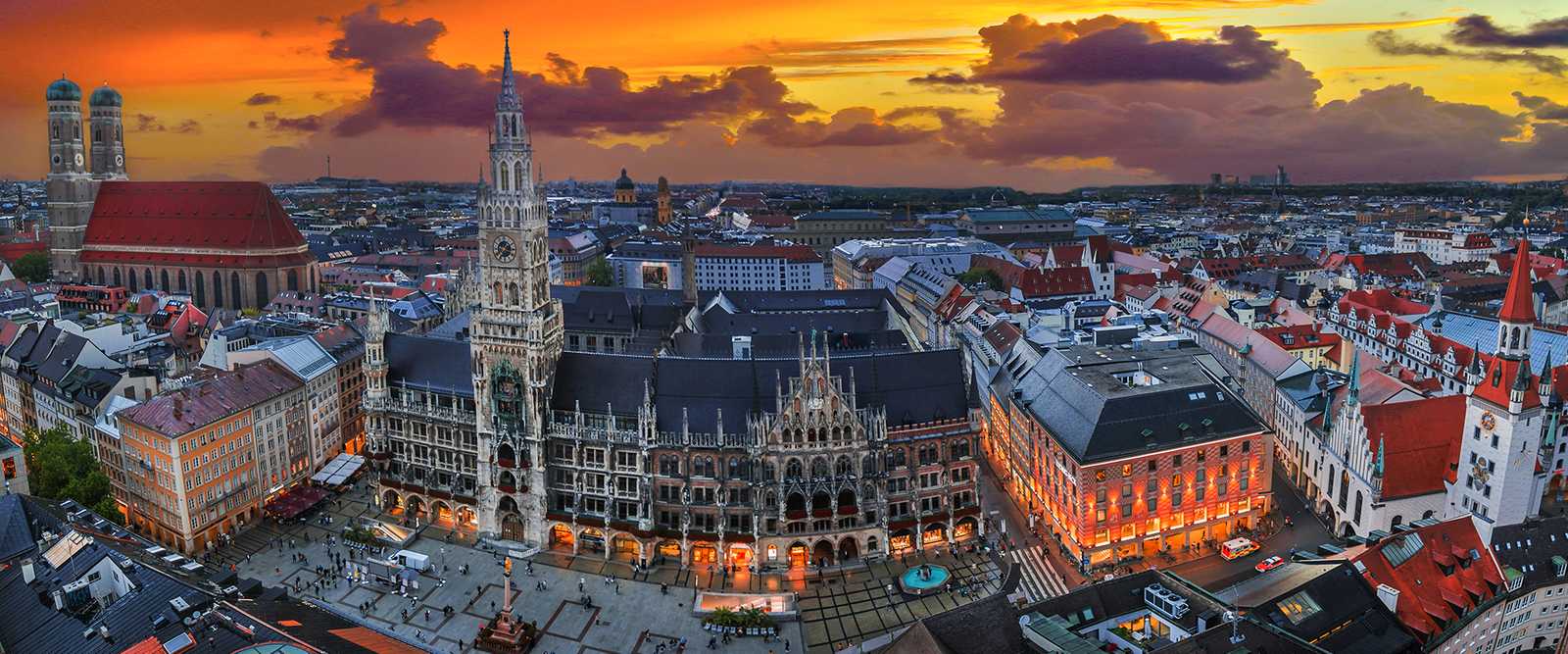
The city is home to several of Germany's largest breweries and is known for its beer and annual Oktoberfest celebration. Munich is a popular tourist destination as well as a conference center. Printing and publishing of books, as well as television production, are important. Munich, Bavaria's capital and Germany's third largest city, is located on the Isar River, on the outskirts of the Bavarian Alps. It started out as a monastery, but when the Duke of Bavaria allowed the monks to set up a market at the river's crossing, it grew into a settlement. The lines of Munich's medieval walls can still be seen in a ring of curving streets, as well as three of the city's impressive old city gates. The Marienplatz, a large, open square in Munich's historic inner city, is where visitors and locals pause to watch the animated clock play out its legend two or three times daily. Along with visiting the beautiful churches and outstanding museums and palaces, you should spend some time enjoying life with the locals at a festival, a colorful market, or over a slice of one of Munich's famous cakes in a konditorei. Residents of Munich also enjoy the city's numerous public parks and gardens, particularly the lovely 900-acre English Garden. Capital: Munich International Airport: Munich International Airport (MUC Population: 1,553,000 Currency: Euro Time: GMT+1 Driving side: Right Main Electricity: 230 V Official Language: Standard German Religion: Christianity
Since the city's foundation, Marienplatz has served as Munich's central square, hosting medieval jousting tournaments and markets until 1807. The English Garden in Munich is not only Germany's largest city park (at 910 acres), but also one of the most beautiful. The large Baroque palace of Nymphenburg, located on the city's northwest outskirts, was originally the Wittelsbach Electors' summer residence in the 17th century. A round contemporary building with a metal shell, housing BMW's museum, is located next to BMW's soaring headquarters and factories at the Olympic Park. Hellabrunn Zoo, which spans 89 acres, is consistently ranked among Europe's best zoos. It was the first zoo in the world to group animals according to their origins, opening in 1911. From the end of November to the 24th of December, Munich's parks and squares are transformed into a dazzling Christmas extravaganza of colored lights, evergreen boughs, and holiday music. In 1862, Königsplatz was designed in the Neoclassical style, and the art district surrounding it contains one of Europe's finest collections of art museums.