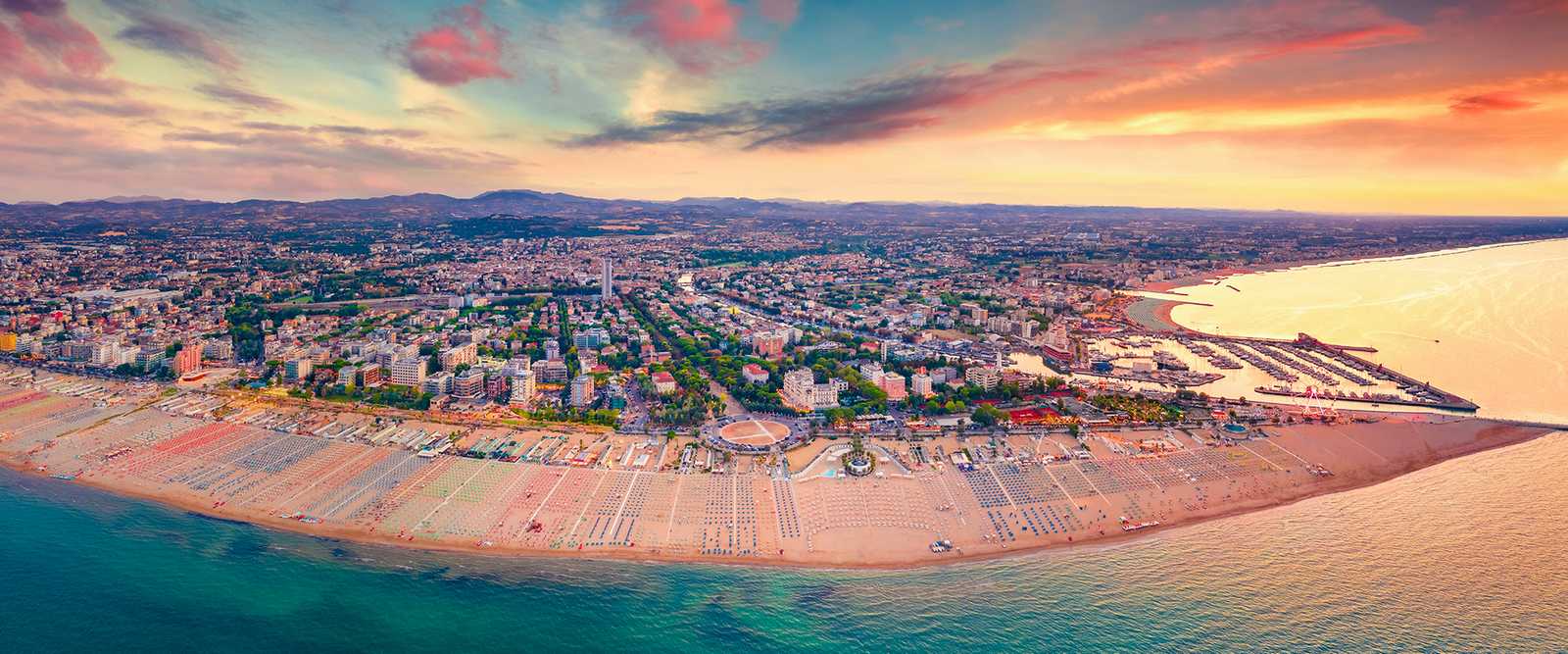
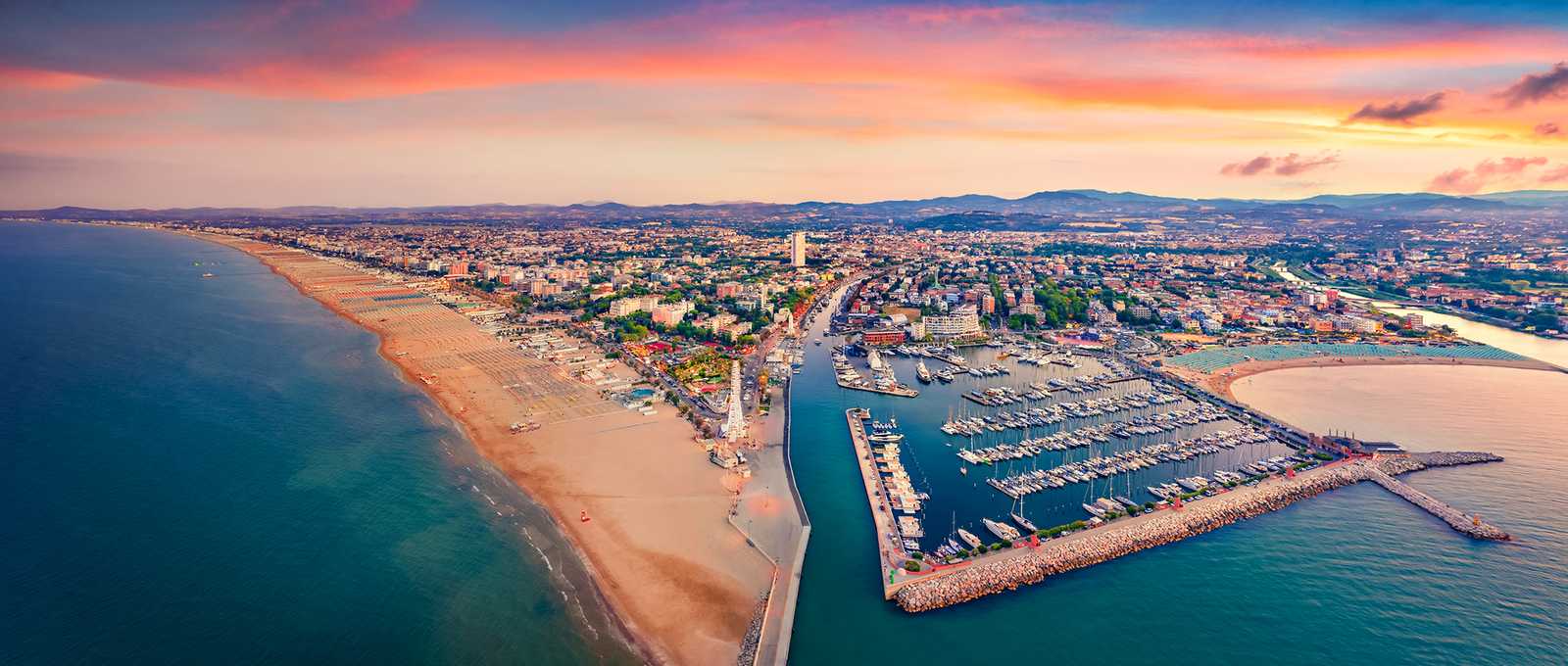
Rimini is a seaside resort town known for its wide beaches and vibrant nightlife. Over 100 beaches and seaside promenades overlook the Adriatic Sea, which are lined with villas, resorts, and hotels. Summer is the time when the beaches are bustling with activity. The ancient settlement of Ariminum grew where two important ancient roads, the Via Aemilia and the Via Flaminia, met about 150 kilometers south of Venice on the Adriatic shore. It became the Roman colony of Rimini in 268 BC and grew into a busy port and, by the late 1800s, a popular beach resort. Considering that it was badly battered by World War II bombing, Rimini has a surprising amount of its Roman past still intact. The long, white-sand beaches that stretch north and south of the port are still popular tourist attractions of the Riviera del Sole, as Italians call their Adriatic coast. The Malatestas, the family that ruled here from the 13th century, were great patrons of the arts and left the city a number of fine buildings and artworks. Capital: Province of Rimini International Airport: Federico Fellini International Airport (RMI) Population: 148,688 Currency: Euro Time: GMT/UTC + 01:00 hour Driving side: Right Main Electricity: 230 V Official Language: Italian Religion: Roman Catholic
The oldest known Roman triumphal arch in northern Italy can be found at the southern end of Corso di Augusto, Rimini's main street. The popular beach resort of Rimini stretches along the Adriatic coast northeast of the old town, a long stretch of white sand with gentle waves and rows of lounge chairs covered by edge-to-edge umbrellas. Children enjoy the Italia in Miniatura mini-trip through the wonders of Italy because they feel like giants in the Lilliputian village of more than 200 scale replicas of Italy's most famous attractions. The colorful Borgo San Giuliano, located near the Ponte di Tiberio, features stone-paved streets lined with small brightly painted houses. Another set of white-sand beaches on the Riviera del Sole is located southeast of Rimini.