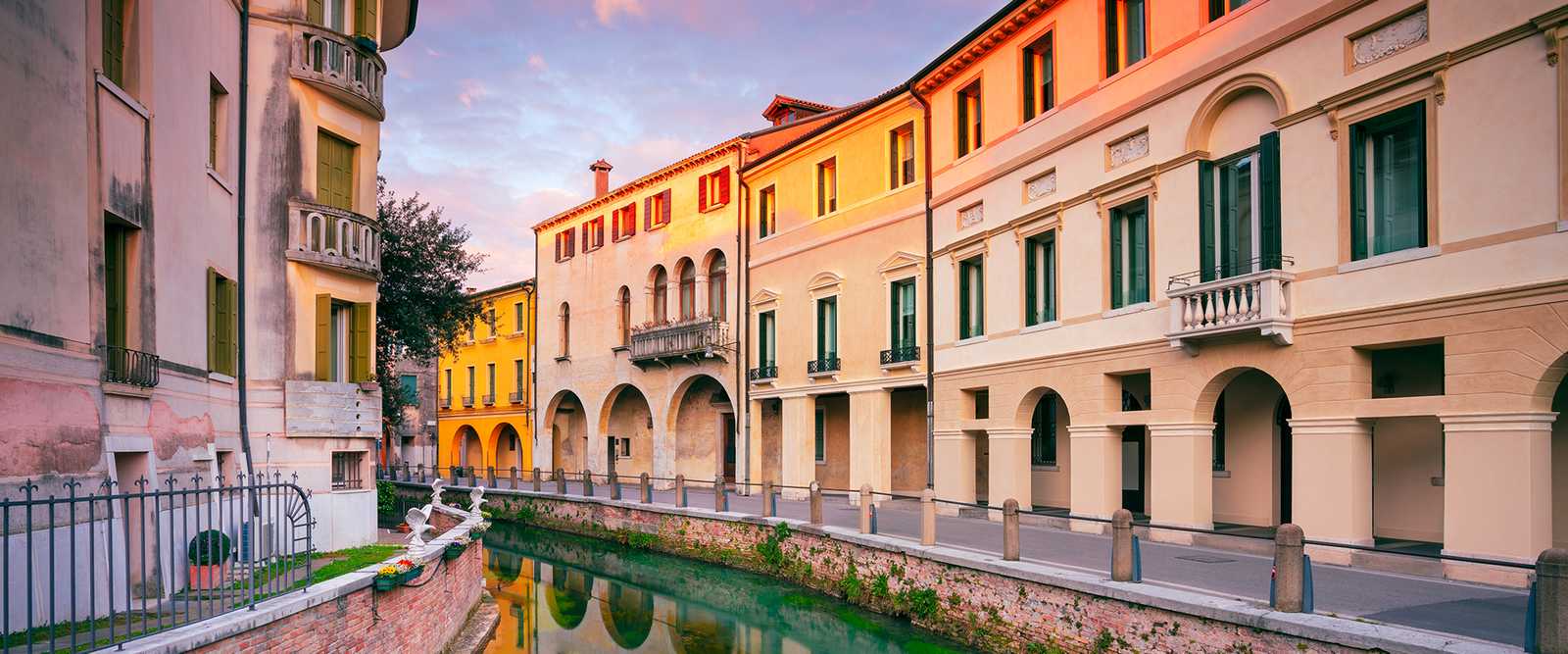
Treviso, the capital of the same-named province, is located 20 kilometers north of Venice in the Veneto plain. It's known as one of the "Little Venices" because of its canals and buildings that rise directly from the water, as well as the Venetian lions on its gates. Even though a modern wall decoration depicts a gondola prow and gondolier, you'd never mistake Treviso's vine- and flower-draped canals or its candy-colored buildings for Venice. Treviso is its own entity, and a delightful one at that. This is an old-world town with narrow streets, many of which are lined with arcades, and well-preserved 15th-century walls. The canals and walls make it a pleasant town to stroll through and admire the numerous frescoes that adorn the facades of the houses. Treviso's art-filled churches have been remarkably well restored and are worthwhile tourist attractions, despite being badly damaged by World War II bombing. Several of them contain frescoes by medieval master Tommaso da Modena. Capital: province of Treviso International Airport: Treviso Airport (TSF) Population: 377,000 Currency: Euro Time: GMT/UTC + 01:00 hour Driving Side: Right Main Electricity: 230V Official Language: Italian Religion: Christianity
San Pietro's five-domed cathedral was built on the site of an earlier Romanesque church in the 15th and 16th centuries. Treviso's well-preserved 15th-century walls aren't the first; the city was founded by the Romans, who fortified it from the beginning. The collections of Treviso's Civic Museum are now housed in two separate complexes, thanks to the restoration of the building on Borgo Cavour. The Dominican church of San Nicol is a large Gothic church built in brick during the 13th and 14th centuries in the southwest corner of the old town. Walking or cycling through the Natural Regional Park along the Sile River is one of the most popular activities in Treviso for both locals and tourists.