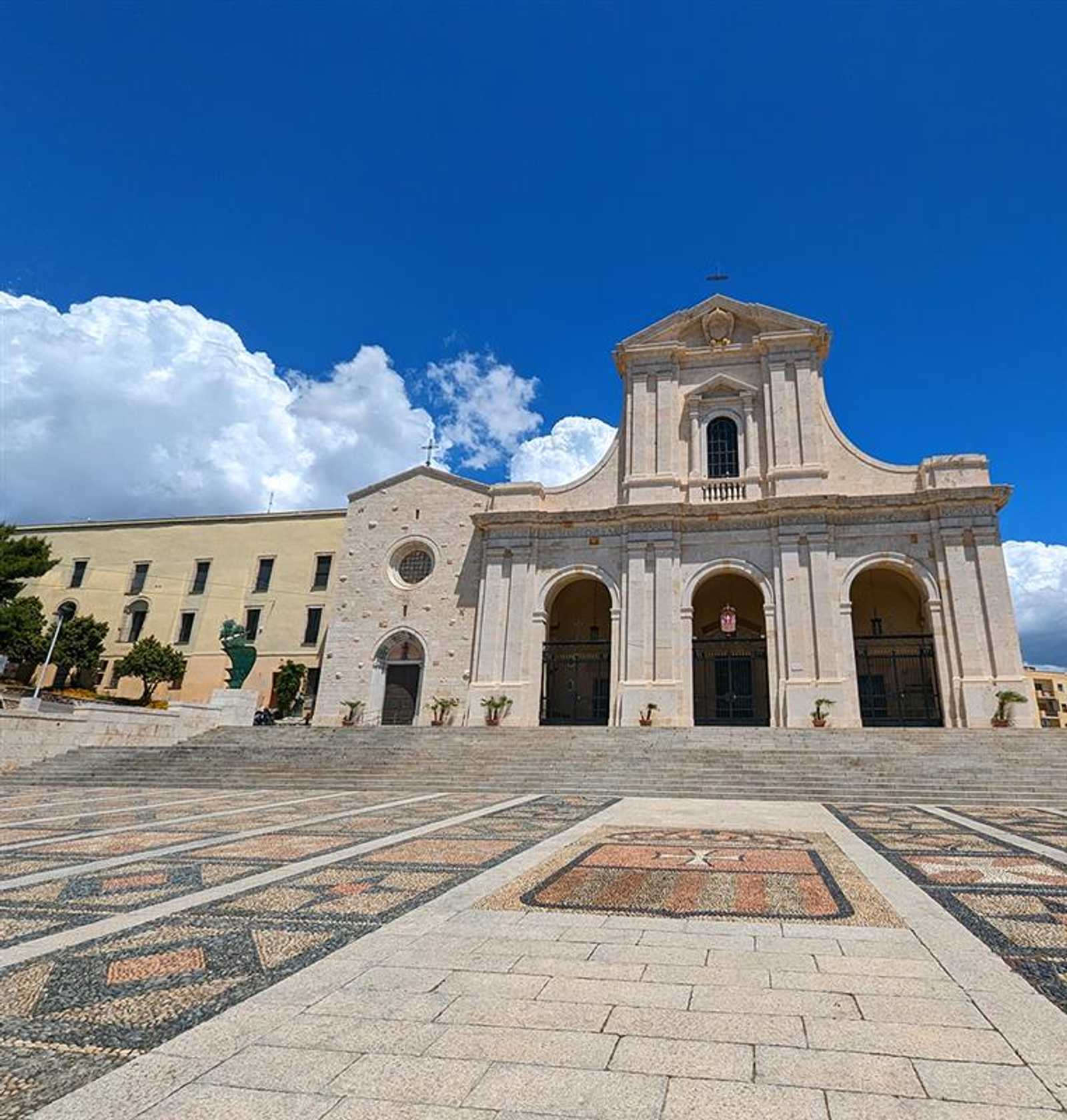
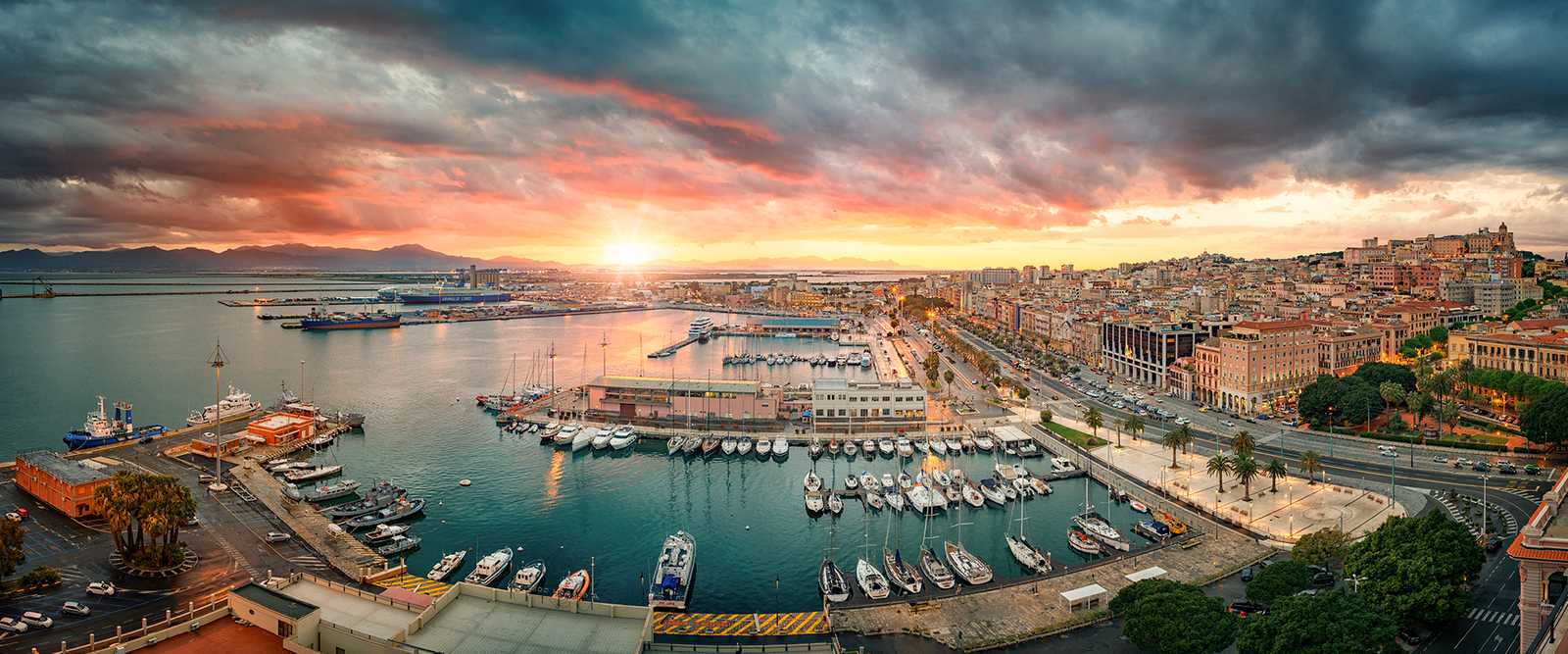
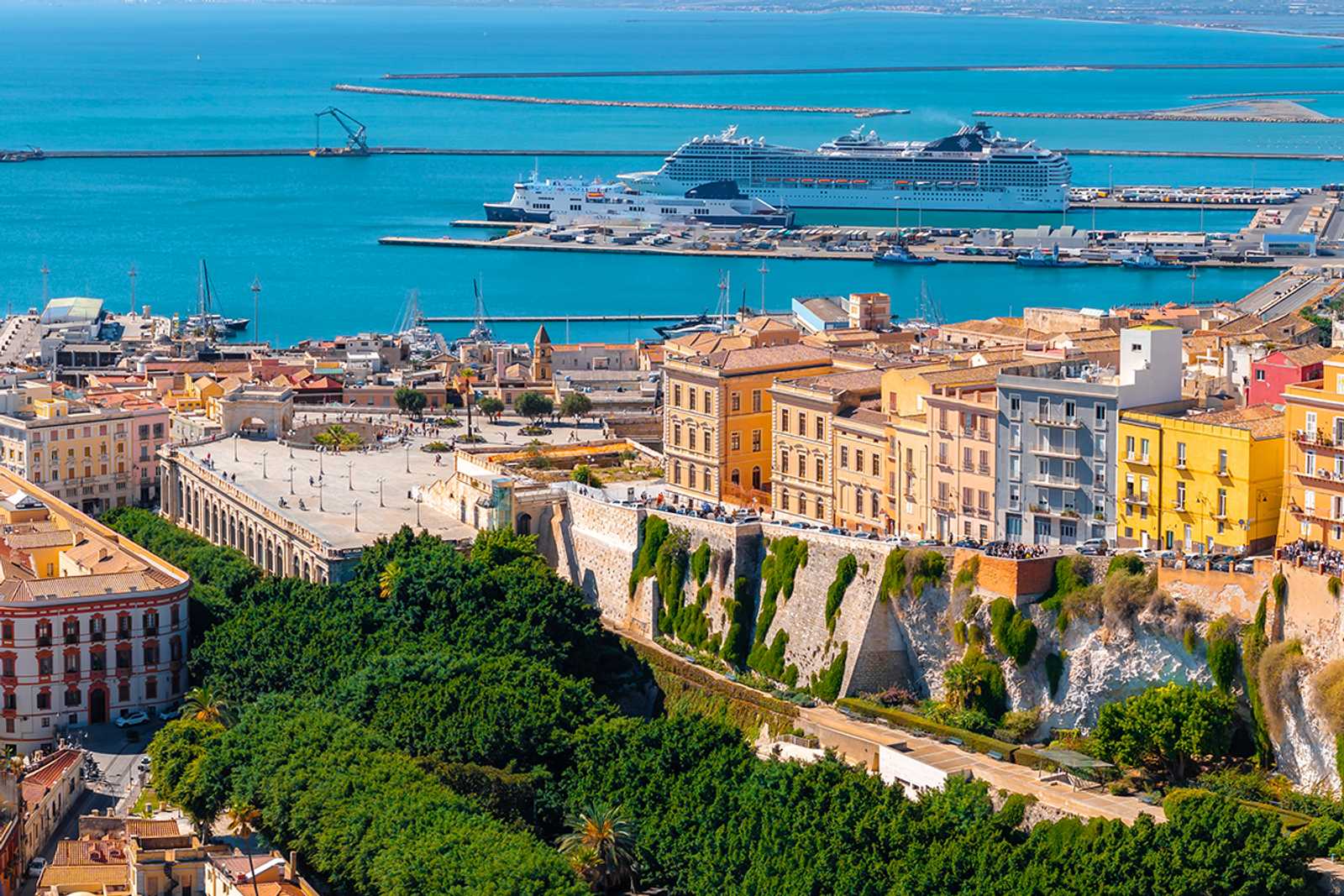
Sardinia, with its location in the Mediterranean, has served as a port of call for everyone who has sailed that sea, from the Phoenicians to today's cruise ships. Not surprisingly, each has left its mark in Cagliari, Sardinia's capital city on the south coast. The Castello is Cagliari's oldest neighborhood. It has been fought over by the Pisans, Genoese, and Spanish, as well as raided by pirates from North Africa, and it clings to the slopes of a steeply rising hill that rises steeply from the harbor. Cagliari's people and traditions reflect this diverse heritage, as does its architecture, which reflects the influences of various periods. The Town Hall, which faces the harbor, combines Spanish Gothic and Italian Art Nouveau, and Neoclassical arcades and bastions, medieval towers, Roman and medieval stonework, and Baroque churches can all be found throughout the city. Although Sardinia has its own language, which many people still speak at home and among friends, everyone speaks Italian, and many people also speak English. It also has its own cuisine, so be sure to sample some of the regional specialties featured on menus. All of this makes visiting Cagliari and the south coast's attractions even more enjoyable. Capital: Cagliari International Airport: Cagliari International Airport Elmas (CAG) Population: 476,000 Currency: Sardinian lira Time: UTC/GMT +1 Driving side: Right Main Electricity: 230 V Official Language: Sardinian Religion: Roman Catholic
Begin your tour of Cagliari by climbing the marble steps of Passeggiata Coperta from Piazza della Costituzione to Bastione San Remy (or taking the free elevator). Many of the original medieval walls were demolished, some to make way for the later bastions, but the Castello quarter still has one imposing tower and gate. A gate in the old Torre dell'Aquila, above Bastione San Remy, leads into Il Castello, the old town's narrow main street, which is a maze of arched passageways, steep lanes, and flights of steps. From the bastions near the museums, you can see a Roman amphitheater built into a natural curve in the hillside's rocky slope at the end of the first century.